Where Wine Began: Qvevri, Amber and the Ancient Vineyards of Georgia and Turkey
October 2026 · 5 min read
Ask most wine lovers where winemaking began and the answer is France or Italy. The older story sits further east, in the Caucasus and Anatolia, where vines have been cultivated for thousands of years.
Ask most wine lovers where winemaking began and the answer is France or Italy. The older story sits further east, in the Caucasus and Anatolia, where vines have been cultivated for thousands of years. Travellers who follow that trail find some of the most distinctive wines in the world, and some of the most welcoming tables.
Georgia: eight thousand years in clay
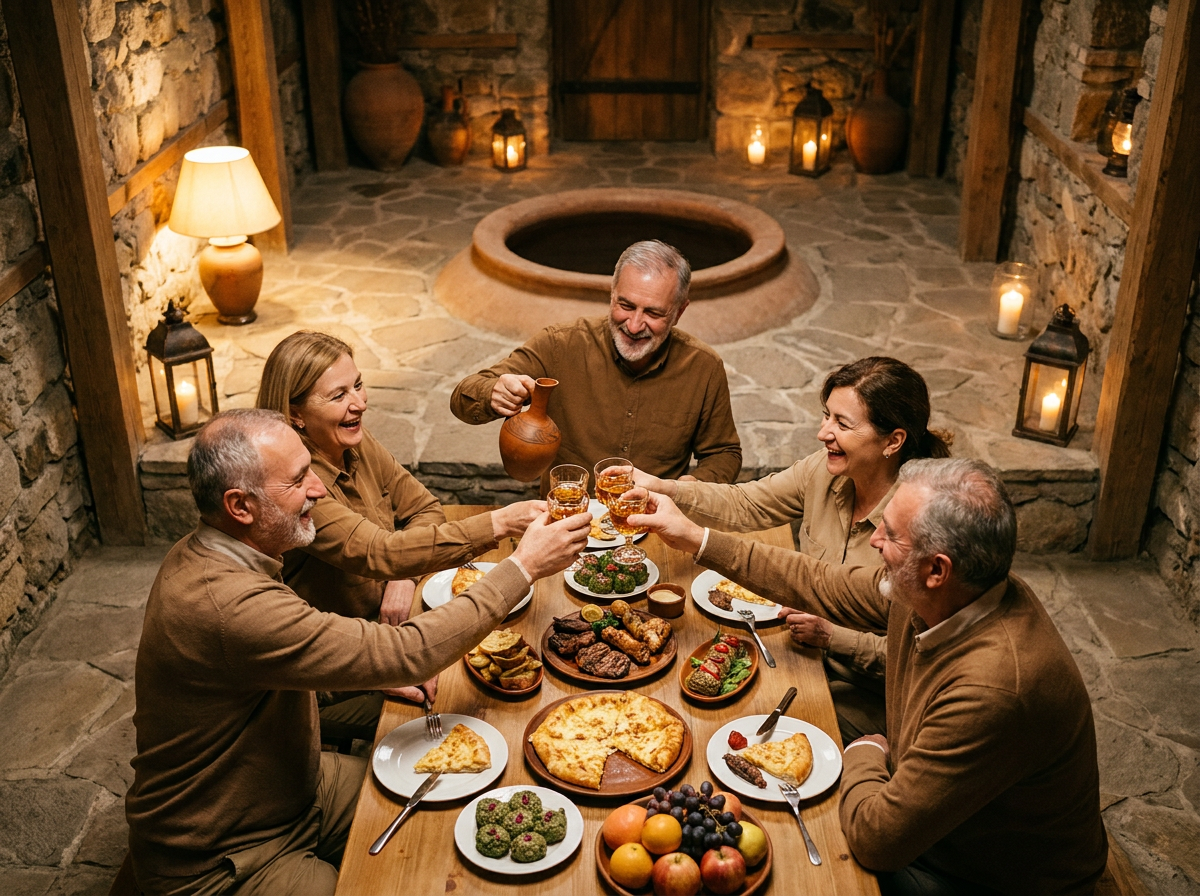
Georgia's winemaking tradition is said to stretch back around 8,000 years, and it is still practised in much the same way. Grapes are fermented in qvevri, large clay vessels sunk into the floor of a cellar, often together with their skins. The method is recognised by UNESCO as Intangible Cultural Heritage. The result is amber wine, also called orange wine, which is textured and savoury and unlike anything made in a stainless-steel tank.
In the east, Kakheti is the country's premier wine region. Saperavi gives deep, inky reds, while Rkatsiteli and Mtsvane become golden skin-contact whites. In the west, Imereti produces a lighter and crisper expression of qvevri wine from varieties such as Tsolikouri and Tsitska. Near the Black Sea, the Adjarian highlands grow Chkhaveri, a rare pink-skinned grape that few visitors ever taste.
A cellar in Georgia is called a marani, and even in Tbilisi travellers can sit in one in the city centre and taste amber wines among old stone walls. Tsinandali Estate, once the home of Prince Alexander Chavchavadze, shows the more refined side of the region's wine heritage.
Turkey: the Hittite vineyards
Anatolia's wine story is just as deep. In Cappadocia, winemaking is said to reach back some 4,000 years to the Hittites. Today native grapes such as Emir and Öküzgözü grow in mineral-rich volcanic tuff, and some wines are aged in cellars carved directly into the rock. Beneath the surface, underground cities still hold ancient clay storage rooms once used for wine.
Further west, the Aegean coast near Ephesus pairs estate vineyards with farm-to-table cooking. Istanbul adds another layer, with Ottoman palace kitchens, spice bazaars and seafood tables where Turkish whites come into their own.
What to taste, and where
- Emir and Öküzgözü: Cappadocia's native varieties, best met at a vineyard lunch.
- Chkhaveri: a rare Adjarian grape, found in the highlands above Batumi.
- Tsolikouri and Tsitska: the lighter, crisper qvevri wines of Imereti.
- Saperavi: Kakheti's deep red, grown in the Alazani Valley.
- Rkatsiteli and Mtsvane: Georgian skin-contact amber wines.
Seeing it properly
Travelling between these regions rewards a slower pace and good logistics. Five hotel stays across twelve days, private transfers and time in the cellars make a difference. This is the thinking behind Tastes of Turkey & Georgia, a twelve-day Private Journey that links Istanbul, the Aegean, Cappadocia, Batumi, Tbilisi and Kakheti.
Karen has travelled in both countries. She loved cooking on the coast of Turkey, and exploring the ancient history and the unusual orange (qvevri) wines of Georgia.
Explore the full Tastes of Turkey & Georgia itinerary, or start planning a journey of your own.
Love the sound of this?
Experience this journey for yourself
Food and Wine Travel designs every itinerary around your tastes, your pace, and the moments that matter most. View the full itinerary details or book a free chat to start planning your own version of this trip.

