Where Truffles Meet Tradition: The Soul of Italian Food and Wine
July 2026 · 8 min read
Piedmont and Emilia Romagna represent everything Italy does best — centuries of refinement, family heritage, and an uncompromising belief that food and wine should never be hurried.
Piedmont and Emilia Romagna are not places you visit for the landmarks — though they have those in abundance. You visit these regions because you understand that the best way to know Italy is through what you put in your mouth and the people who put it there.
These are two of Europe's most refined food and wine cultures, and the deeper you go into each, the more you realise how little they have to do with what most people think of as Italian food.
The Langhe: Where Vineyards Meet Ancient Forest
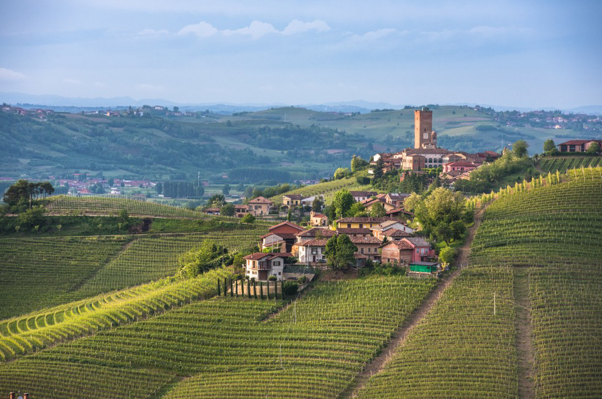
Begin in Piedmont, in the Langhe region — a landscape so distinctive that UNESCO made it a World Heritage Site. Here, around villages like Alba and La Morra, vineyards roll across hills that seem designed by someone who understood beauty at a molecular level.
The wine grown here is Nebbiolo — a grape that takes its name from the morning fog (nebbia) that hangs over the region each autumn. It produces two of the world's greatest wines: Barolo and Barbaresco. These are not wines to drink casually. A bottle of 1990 Barolo can still be drinking beautifully at thirty years old, and a Barbaresco at twenty.
But Nebbiolo isn't the only reason to be here. The Langhe is truffle country — specifically, it's white truffle country. Between September and December, locals and their dogs venture into the forest at dawn in search of these buried treasures. There's no better way to understand the region than to go truffle hunting with an expert, watching the ancient dance between hunter and dog as they find what has spent months developing underground.
And then there's the food. Piedmontese cooking is precise, ingredient-driven, and unafraid of butter. Tajarin — thin egg pasta — dressed with the truffle you've just found, or with a sauce of meat and wine that's been simmering since morning. Brasato al Barolo — beef braised for hours in the local wine until it's so tender it falls apart at the mention of a fork. Vitello tonnato — veal so delicate and the tuna sauce so subtle that you wonder how something so simple became so perfect.
Bologna: The Heart of Italian Food
Then you travel east, by train, into Emilia Romagna — and specifically to Bologna, the capital of Italian food.
Bologna's claim is not without basis. This is the place where they invented tortellini (the legend involves a seduction, a innkeeper, and a keyhole — it's worth looking up). This is where they perfected the art of cured meats. This is where they learned that the right vinegar, aged for generations in wooden barrels, becomes something that tastes nothing like vinegar and everything like refinement.
A day in Bologna should include: a guided walk through the historic centre, with stops to sample local specialties. Taste the mortadella — the real thing, not what you get in supermarkets — from a producer who grinds the meat fresh. Visit a Parmigiano Reggiano dairy and watch the cheesemakers work — there are strict rules about how this cheese is made, and they follow them not because they have to but because they understand that the rules exist for a reason.
At a traditional balsamic producer, you'll taste vinegars that are 12 years old, 25 years old, some even older. The oldest are worth thousands of euros per bottle — you don't drink them, you use a few drops as a condiment on ice cream, or to finish a plate of aged Parmigiano. That's not extravagance; it's the only way to taste something that complex.
Why These Regions Matter
What makes Piedmont and Emilia Romagna different from so many other food destinations is not just the quality — though the quality is extraordinary — but the philosophy underneath it all.
These are regions where traditions have been refined over centuries, where producers take pride not in innovation but in perfection. A family might have been making the same dish the same way for six generations, and they're not going to change it because a trend says they should. A winemaker's job is to understand their piece of land and express it in wine — not to chase points and scores.
That approach — to honour what came before, to respect the land and the seasons, to believe that shortcuts are a lie — is what drew me to these regions in the first place, and it's what keeps bringing me back.
It's also why you need to go slowly. Eight days between Piedmont and Emilia Romagna is not a lot of time, but it's enough to begin to understand. You'll stay in one place long enough to eat at the same restaurant twice and have the owner remember your name. You'll visit a winery and talk to someone whose family has been there for four generations. You'll buy vegetables at a market and prepare a meal with them that evening. You'll understand, not just intellectually but through your taste buds, why these regions are where they are.
One Last Thing
Both regions are beautiful in their own way — but they're not beautiful in the way people usually expect Italy to be. There are no Renaissance paintings here, no ancient amphitheatres. What you get instead is something rarer: landscapes that have been shaped by the pursuit of perfection, villages that exist because of the land and what it produces, and people who understand that the best meal is never the fanciest one — it's the one where someone who knows their craft has done it right.
That's what you're looking for when you come to Piedmont and Emilia Romagna. And if you find it — really find it — you'll understand why people have been coming back to this corner of Italy for centuries.
Love the sound of this?
Experience this journey for yourself
Food and Wine Travel designs every itinerary around your tastes, your pace, and the moments that matter most. View the full itinerary details or book a free chat to start planning your own version of this trip.

