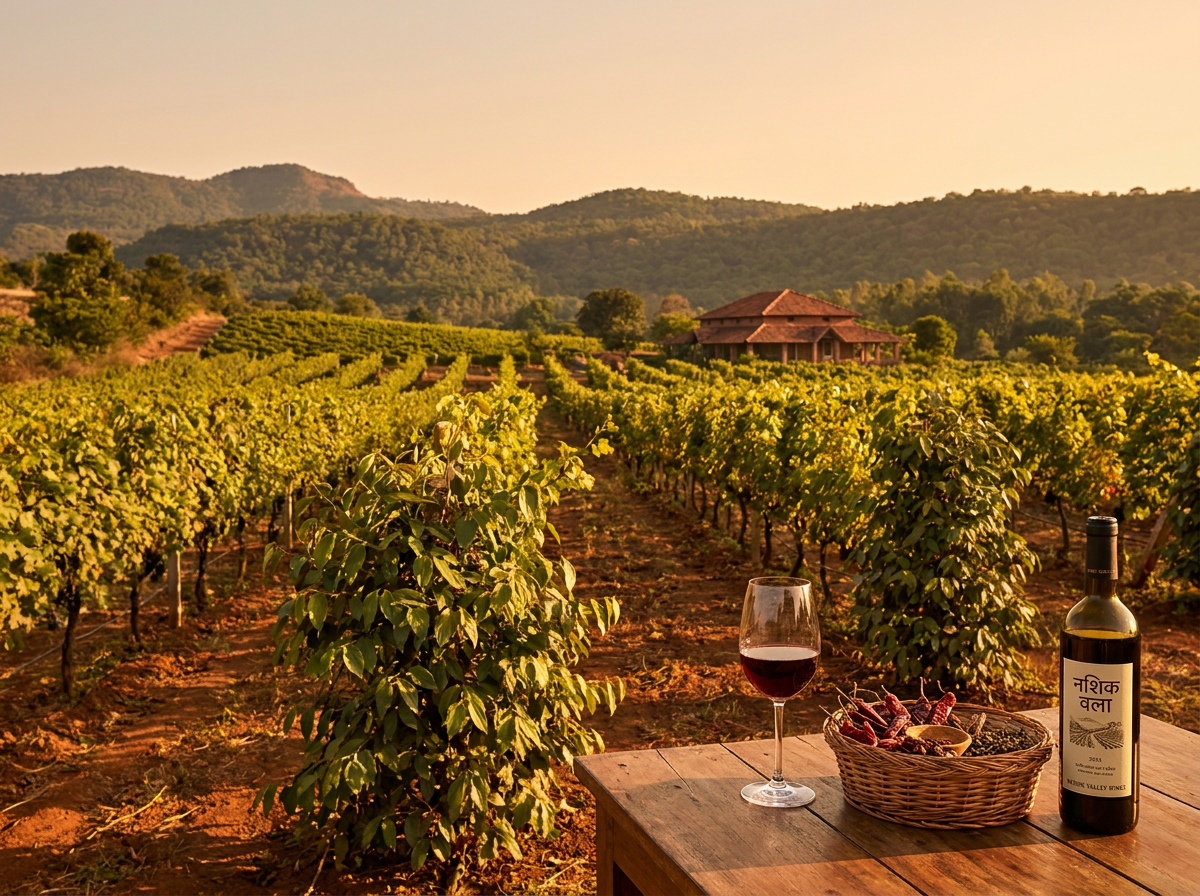
India's Wine Revolution: How Nashik and Beyond Are Redefining Wine in Asia
July 2026 · 7 min read
For decades, wine tourism meant Europe. But India is writing a new story — one of boutique producers, terraced vineyards, and wine made in a country where the knowledge is fresh and the energy is electric. Here's why now is the time to discover it.
For decades, wine tourism meant Europe. A pilgrimage to Bordeaux or Tuscany or the Rhône Valley — places where the tradition runs so deep that it is written into the soil itself. Those journeys are magnificent, and they should remain on everyone's list. But the wine world is shifting, and India is at the centre of that shift.
India's wine story is not about competing with Europe. It's about something different entirely: the thrill of discovery, the energy of an emerging region, and the realisation that excellence can be grown in unexpected places.
The First Wine Taste in Nashik Might Change Your Mind
Nashik is India's wine heartland — a plateau region in western India where the soil, elevation, and climate align to produce wines that have won international recognition. The first time you taste a Sauvignon Blanc from Sula Vineyards at their iconic Tasting Room overlooking the Gangapur Lake, or a Cabernet Sauvignon from York Winery, something clicks. This is not Indian wine made in imitation of European style. This is wine made in India, for India, by producers who understand their place.
The biggest difference between tasting wine in India and tasting wine in Europe is the mindset of the producer. In Bordeaux, centuries of tradition sometimes mean caution — a winemaker is working within established parameters, refining a formula that has worked for generations. In Nashik, the winemakers are writers inventing a new language. They are experimenting. They are confident but not certain. They taste like people who are building something, not maintaining it.
Why India's Wine Regions Matter Now
India's wine industry is still young — most boutique producers have been operating for fewer than twenty years. But in that short time, the quality has moved from novelty to genuine achievement. Award-winning Shiraz. Elegant Chardonnay. Complex blends that hold their own against wines three times the price. And because the industry is young, there is still an exceptional quality to a visit: the producers are accessible, often pouring their own wines. The winemakers will spend an afternoon with you explaining their choices because they genuinely want people to understand what they are trying to do.
That kind of access — where a wine producer cares whether you understand their wine, not whether you buy it — is becoming rarer in established wine regions. In Nashik, it is still the norm.
Wine + India = A Different Kind of Journey
But wine tourism in India is more than just the wine. It's the contradiction of arriving in Mumbai's frenetic energy and then, within hours, being in the meditative gardens of Pune. It's the temples and the markets and the food — spices and bold flavours that seemed incompatible with wine until you taste a Sula Shiraz alongside them and realise that wine was always meant to taste like this.
It's staying on a vineyard estate surrounded by the terraced slopes where your wine is made, and for breakfast the next morning, picking fruit from a tree you walked past the day before. It's the profound spirituality of the country — the rivers, the ancient temples, the sense of layers of history beneath every stone.
And it's the people. An India that is proud of what it is producing, that is not looking over its shoulder at Europe but building something entirely its own.
Why Now Is The Time
Wine tourism is still new to India. The infrastructure is not yet built for mass tourism — and that is precisely why it is worth going now. The wineries are not yet overwhelmed. The experiences are personal. The prices are sustainable. And the producers are still hungry to welcome people who want to understand what they are trying to achieve.
In five years, Nashik might be the established wine destination everyone visits. In ten years, it will certainly be known internationally. But right now, in 2026, it is still possible to visit when it feels like you are genuinely discovering something — not following a guidebook.
What You'll Taste Differently When You Return
The real education that a week in India's wine regions provides is not about India. It is about wine itself. Wine made outside the established European traditions begins to change how you think about all wine. You start to understand that terroir — the sense of place in a wine — is not about history and tradition. It's about soil and sun and the person who decided to plant vines here and believe that something extraordinary could grow.
A wine from Nashik might be made by someone who learned their craft ten years ago instead of inheriting it from a family with centuries of knowledge. And somehow that does not make it less authentic. It makes it more — more earnest, more alive, more obviously rooted in the specific place where it was made.
That experience changes how you taste wine forever.
Where To Begin
Nine days from Mumbai through Pune into Nashik and finishing in Bangalore gives you exactly enough time to move slowly through India's wine world. Days in spiritual Pune. Mornings visiting the award-winning producers of Nashik — Sula, York, Chateau d'Ori, Valle de Vin. Evenings that begin with a glass of wine and end with a meal that would be extraordinary anywhere but tastes different when paired with an Indian Shiraz on a terrace overlooking the vineyards where it was made.
This is wine tourism for people who are curious about what wine could be — not just what wine has always been. For people who understand that the best discoveries are the ones still being made.
Love the sound of this?
Experience this journey for yourself
Food and Wine Travel designs every itinerary around your tastes, your pace, and the moments that matter most. View the full itinerary details or book a free chat to start planning your own version of this trip.

